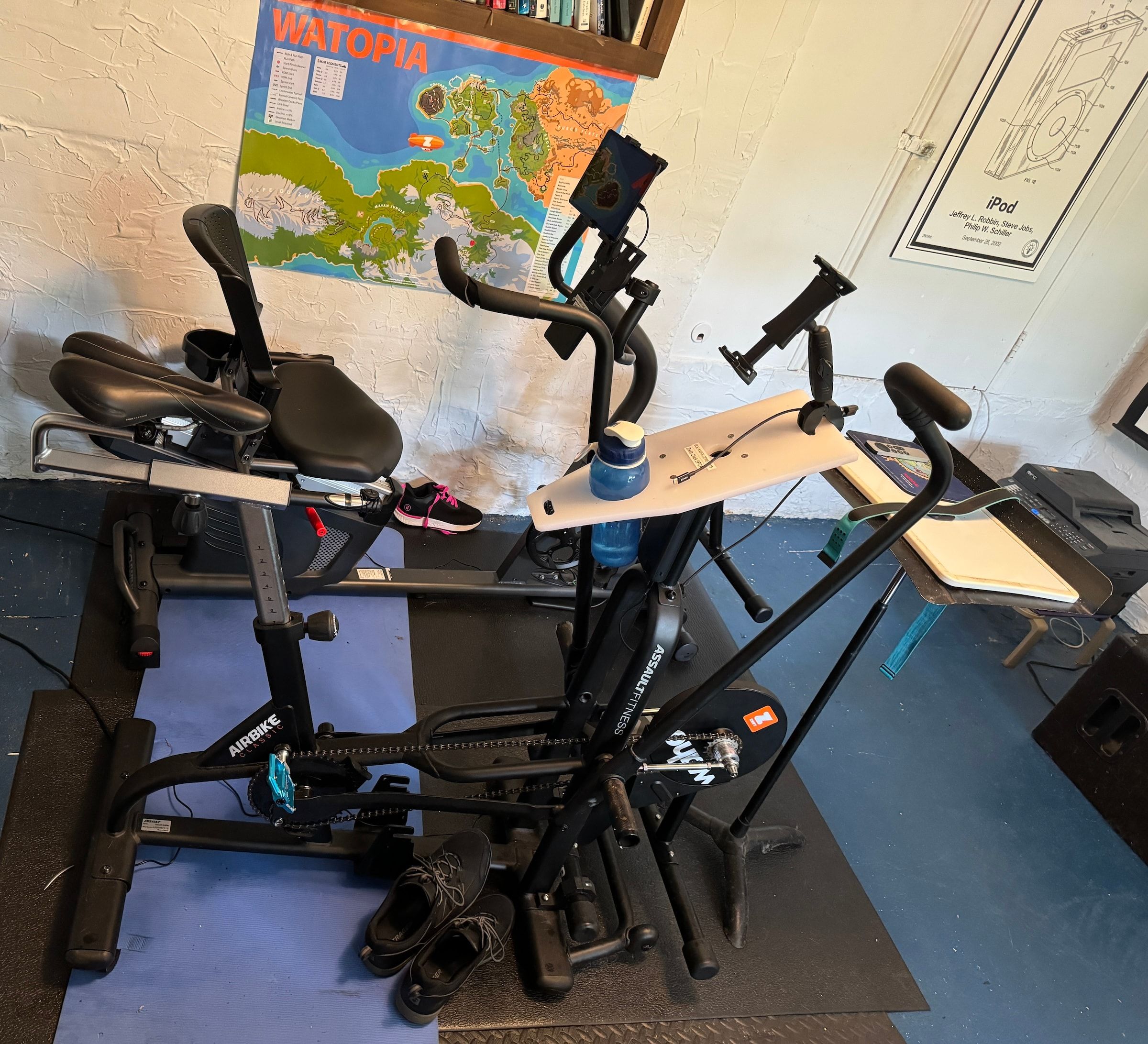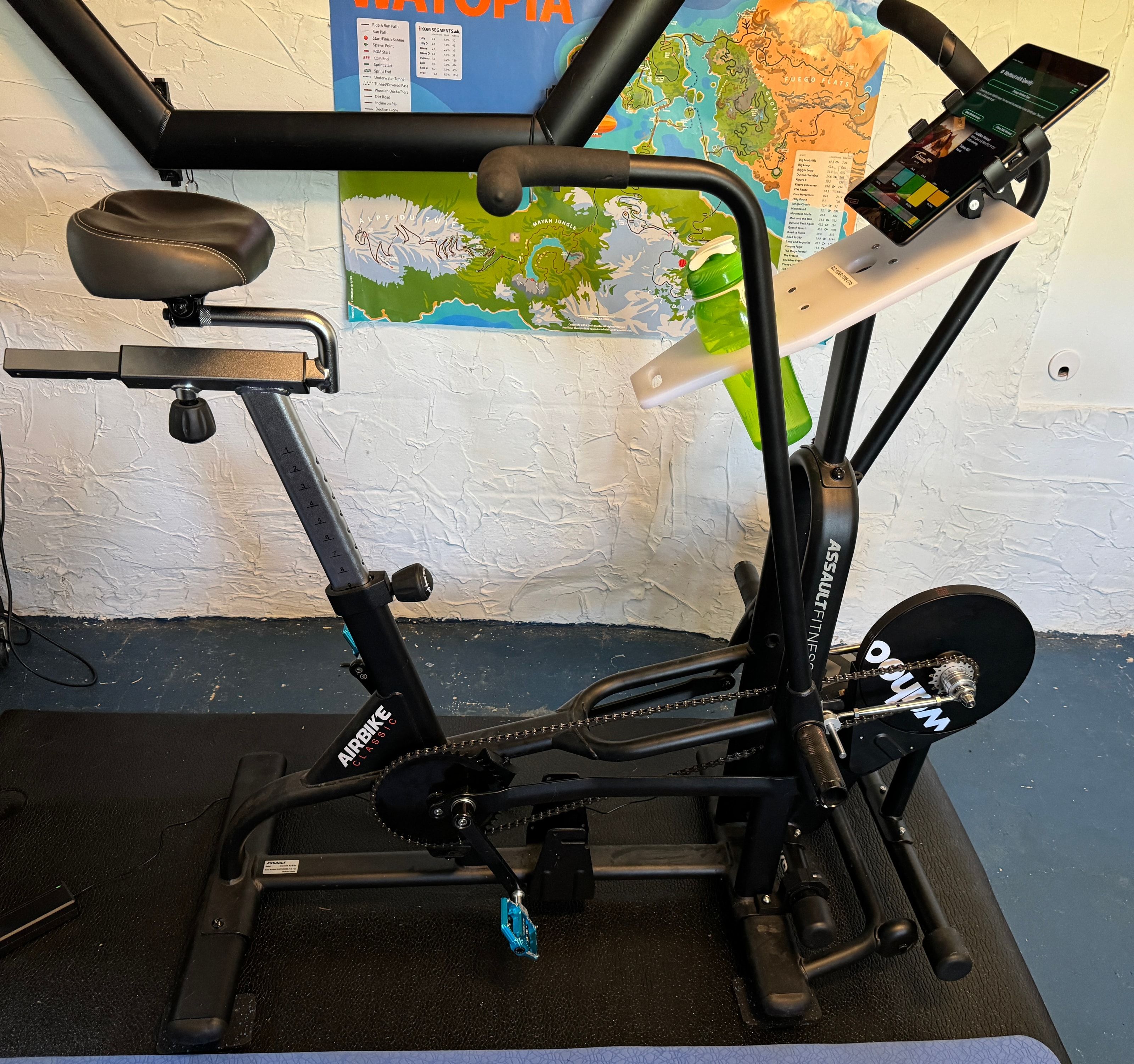
I enjoy cycling software enough to care about the game layer, but sometimes I want more than a seated cycling motion. The Assault AirBike experiment asked whether I could keep its moving handles and still earn the connected ride data that makes a virtual session engaging.
A useful mechanical shortcut
This was one of the easier mashups. The AirBike already connects its pedals and handles through a common mechanism, so driving a smart trainer from that system lets upper- and lower-body motion contribute to the same workout.
The KICKR CORE replaced the original fan as the controllable load. From the application’s point of view it is still talking to a familiar cycling trainer. From my point of view, I get to ride a machine that does not behave like a conventional bicycle.
The machine I actually rode
For a stretch, this was the only bike I was riding. That is a better test than whether a prototype moves correctly on the stand. It means the odd combination created an experience I wanted to return to.
The build remains a working prototype because an exposed drivetrain, moving handles, and altered loading deserve continued attention. The successful part is the premise: connected cycling does not have to require a standard cycling posture or a standard bicycle.