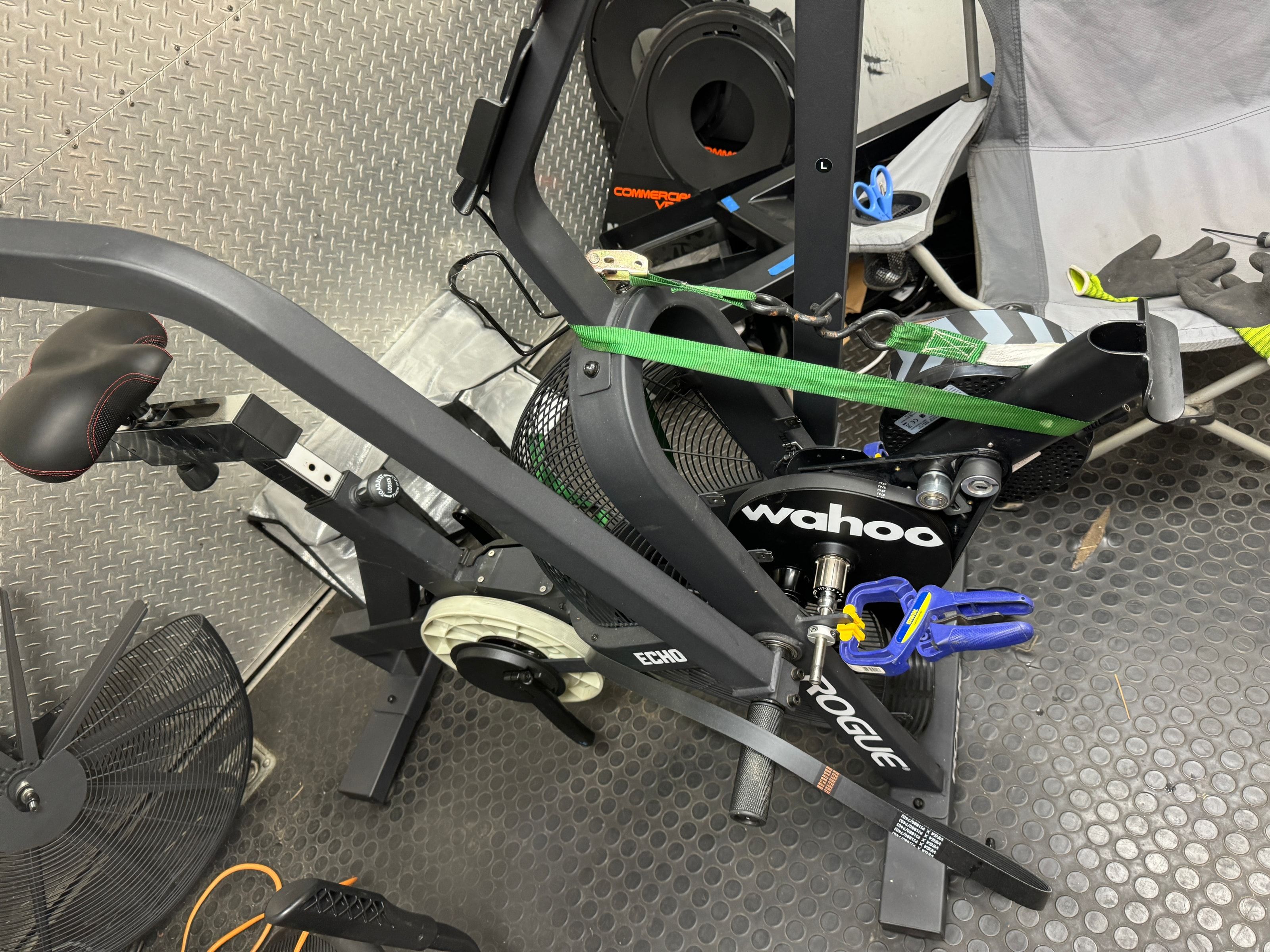
The Rogue Echo offered more clearance around its moving handles than the Assault AirBike, so it looked like the better long-term home for the air-bike idea. It also supplied the useful kind of complication: enough room to make the concept fit, followed by a drivetrain problem that refused to be ignored.
When the first belt said no
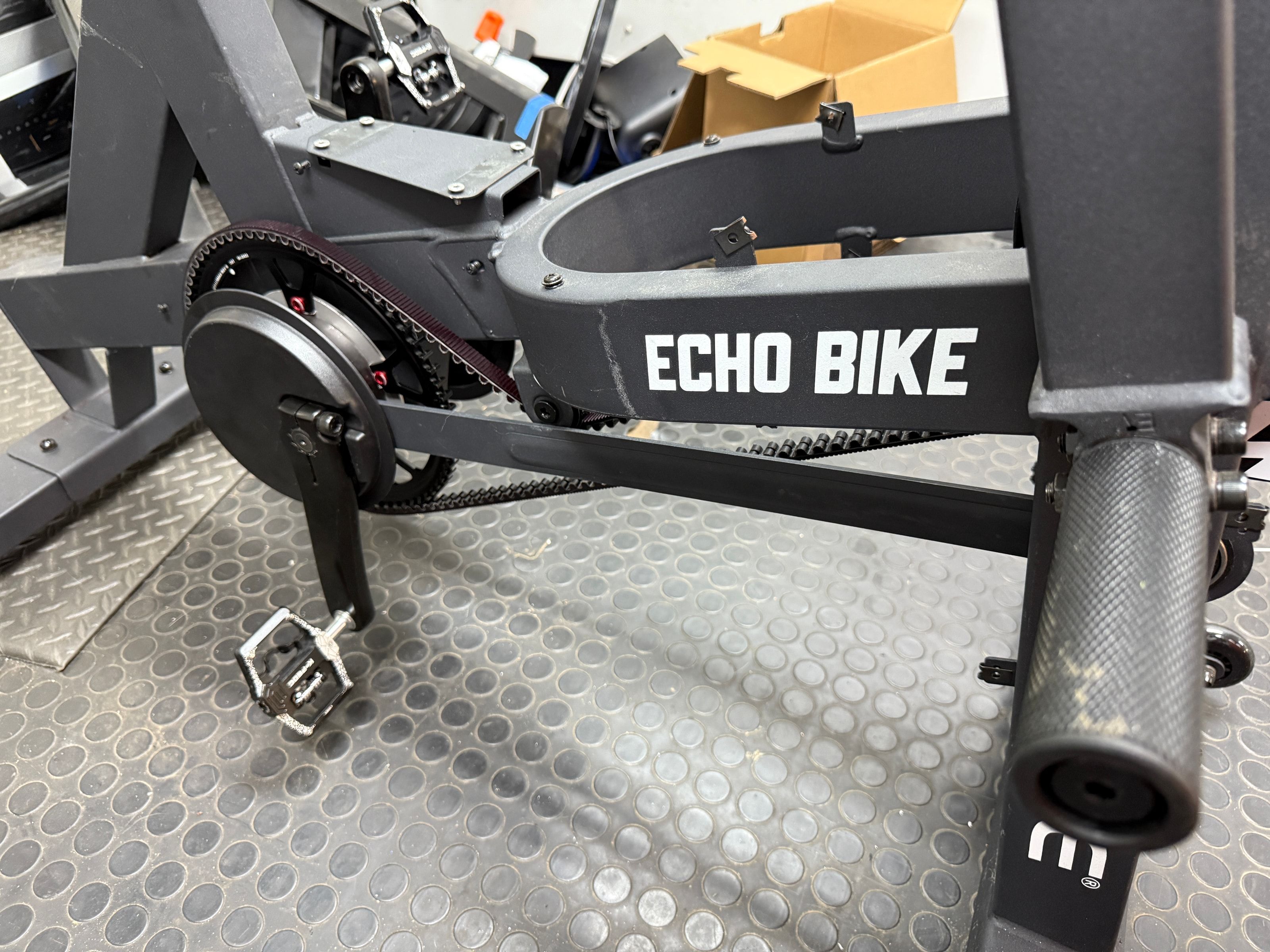
The original layout used a ten-rib belt. It could turn the KICKR CORE, but the combination of trainer flywheel and changing load made the belt prone to slipping. I considered switching to chain, which would have been direct and familiar, but I did not love adding chain noise and maintenance to a machine intended for indoor use.
The eventual answer was a Gates Carbon Drive. Its toothed belt gave the drivetrain a positive engagement while keeping the quiet, low-maintenance character I wanted.
From mashup to machine
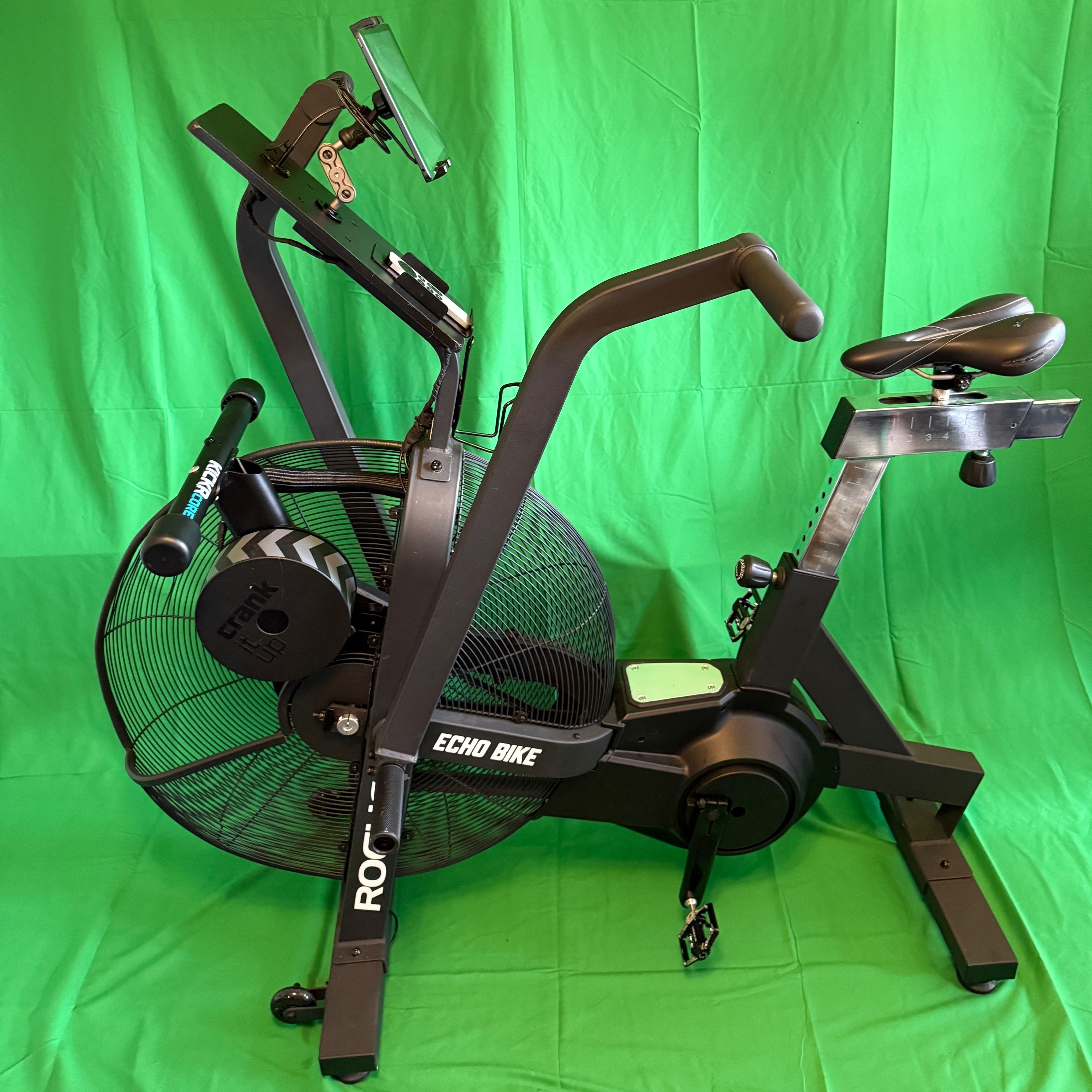
The finished build is the first one that began to look less like a test rig and more like a coherent piece of equipment. The trainer tucks beside the frame, the belt path is legible, and the air-bike handles remain fully part of the experience.
It is still unmistakably a FrankenTrainer, which is the point. The visible adaptation tells the story of why the machine exists: I wanted the whole-body motion of an air bike and the responsive resistance and software connection of a smart trainer, and there was no reason those had to remain separate products.