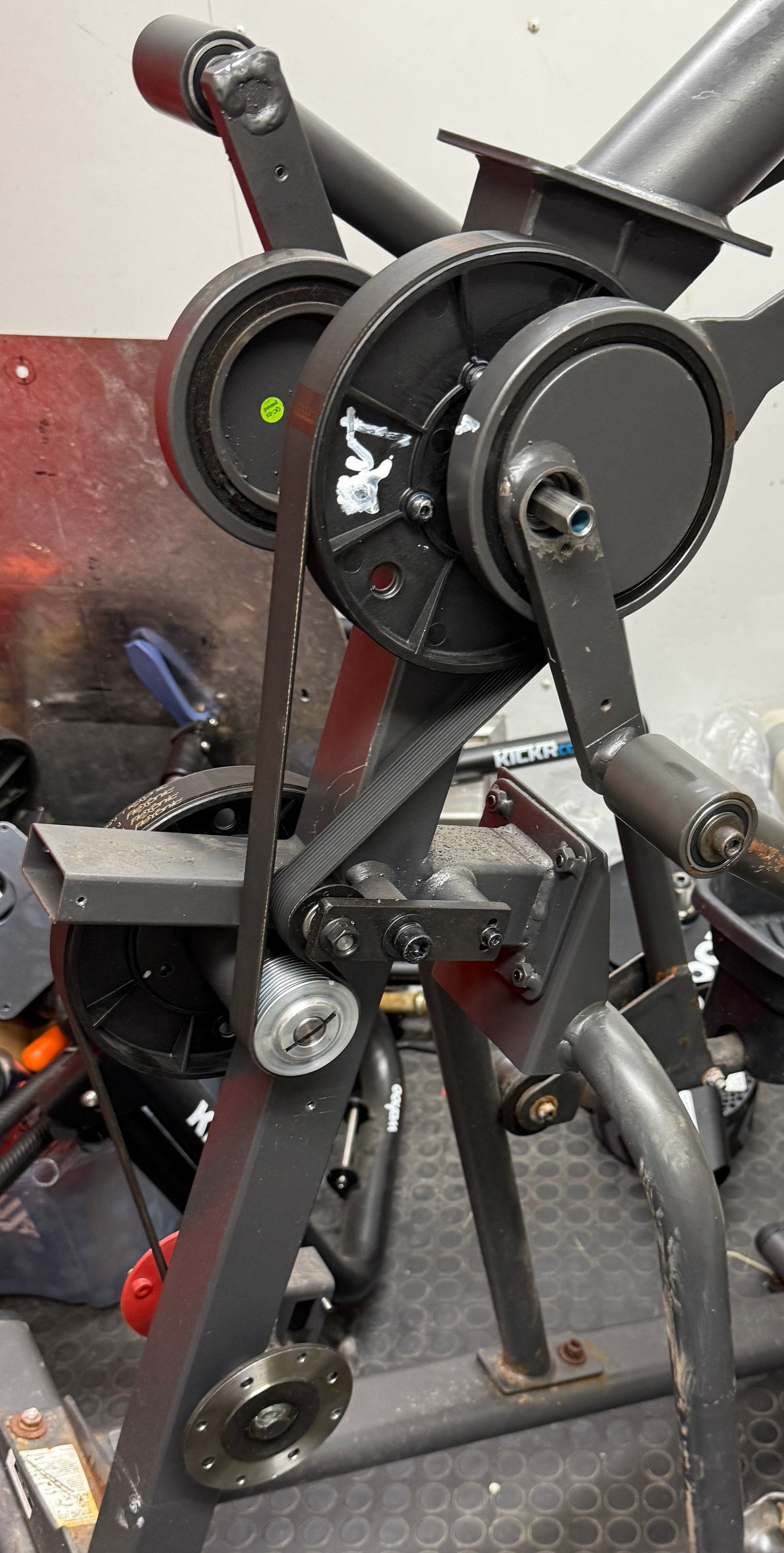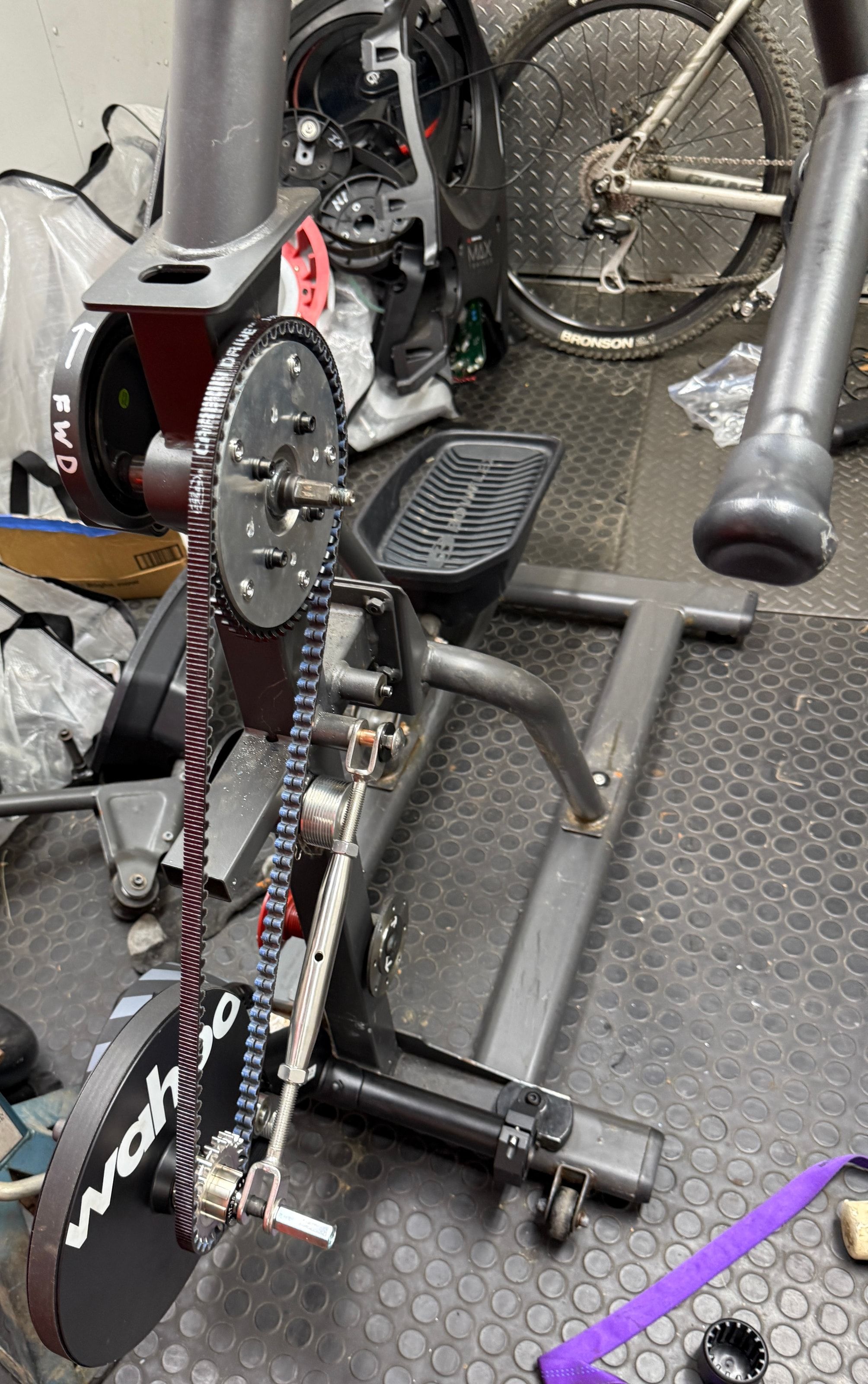
The Bowflex Max experiment starts from a different body position. It is a compact, weight-bearing stepper and elliptical-like platform, and used examples can be overlooked for the same reasons as older recumbents: the mechanical machine remains substantial while its original digital experience feels fixed in time.
My first connected 5K on the prototype was hard work. It also revealed that attaching a cycling trainer to a stepping mechanism is not just another version of the air-bike problem.
A different kind of input
Pedaling is continuous. Stepping has a stronger pulse as body weight alternates from side to side. That discontinuous input makes the KICKR flywheel feel clunky in the current layout, especially at low speed.
The crank also turns too slowly for the trainer’s normal calibration routine. That is a system-level mismatch, not something software wording can hide.
The next mechanical question
The next direction is to restore more of the Bowflex belt stages and drive the trainer from a faster point near the original fan location. Increasing trainer speed should help the flywheel behave more naturally, but every extra belt stage introduces its own startup loads, alignment needs, and possibility of slipping.
That is where this build stands: promising enough to keep on the bench and unresolved enough to label honestly. The page will change as I learn whether the speed increase produces a useful workout without turning the drivetrain into a maintenance project.