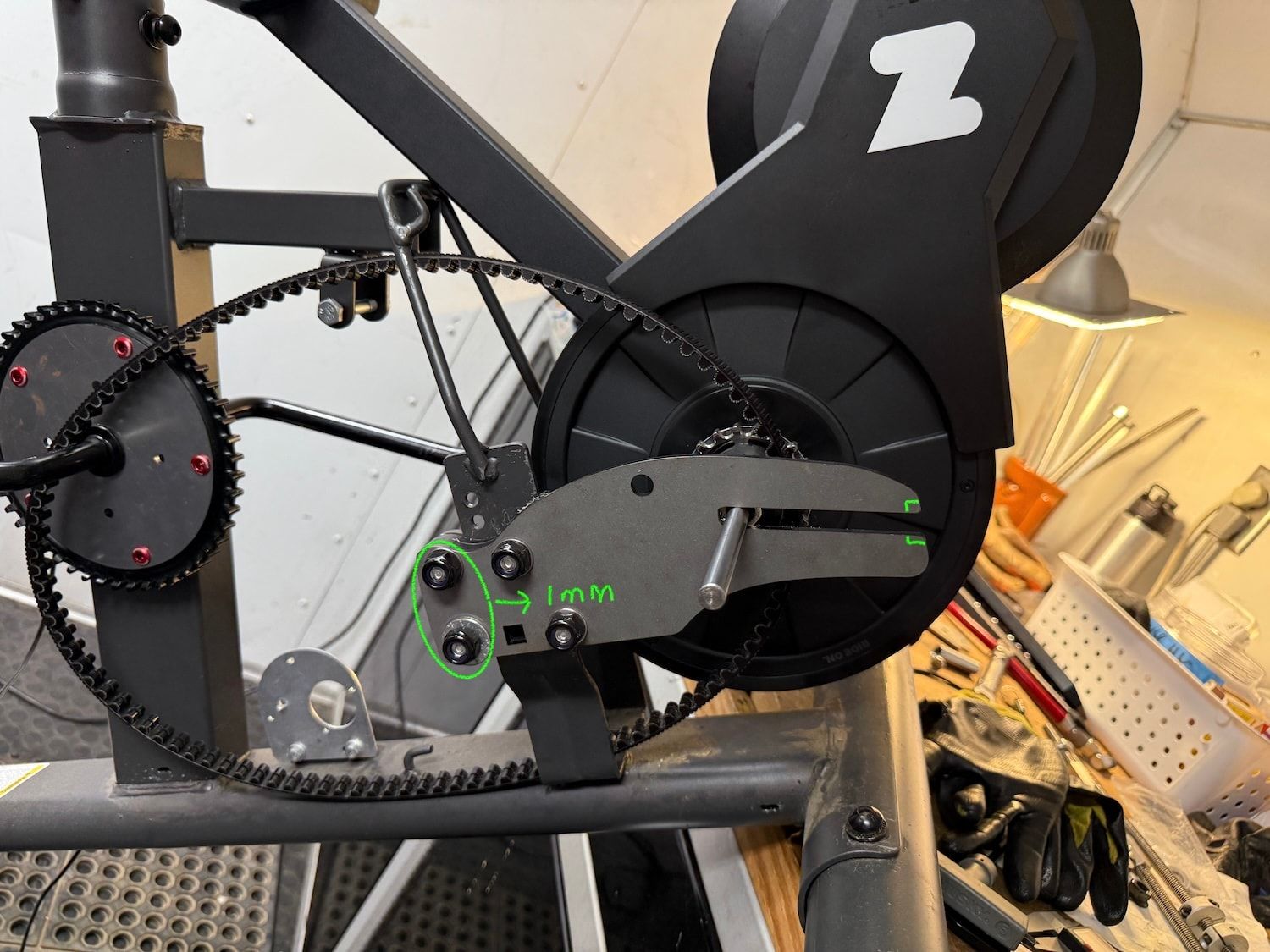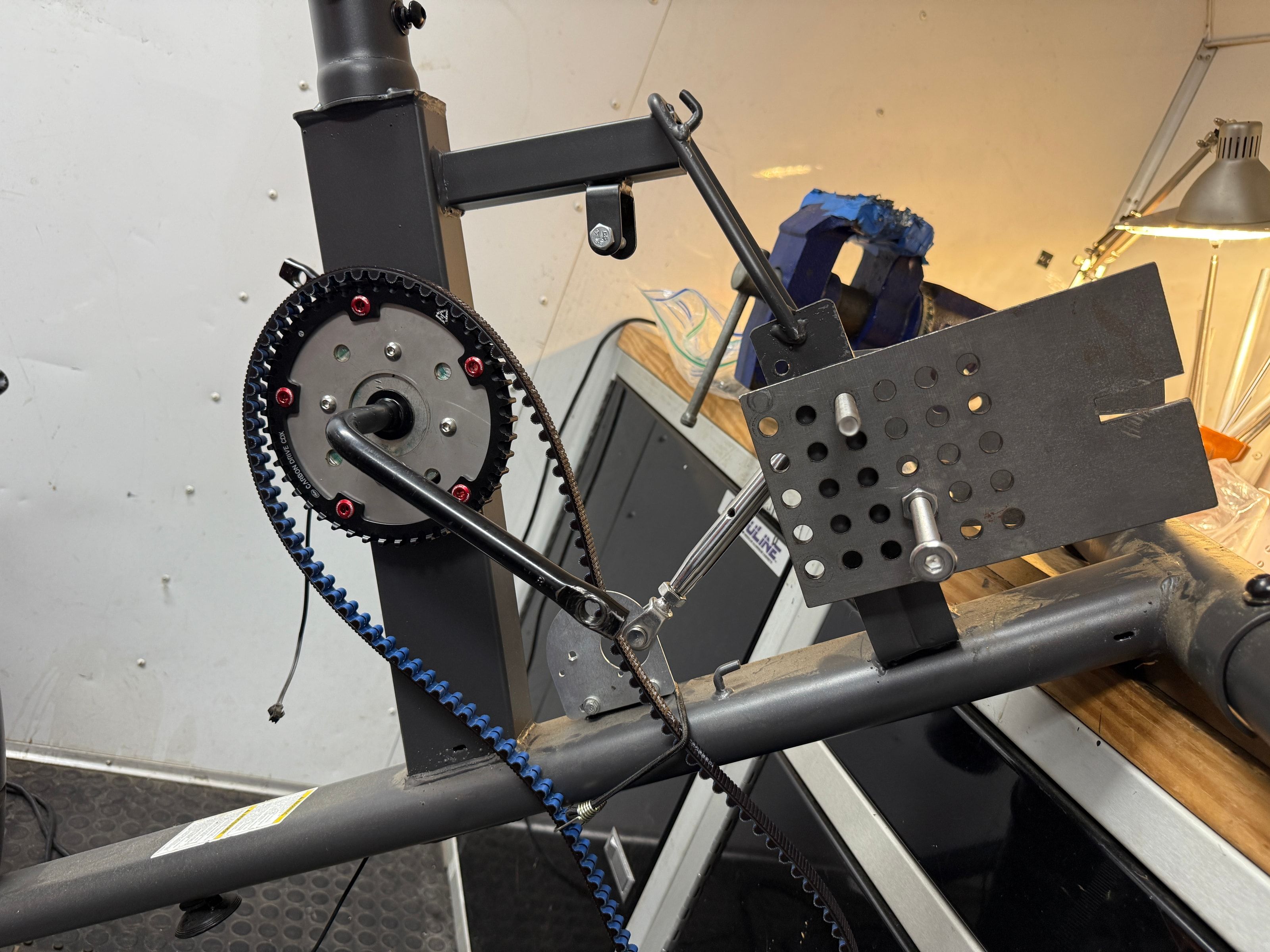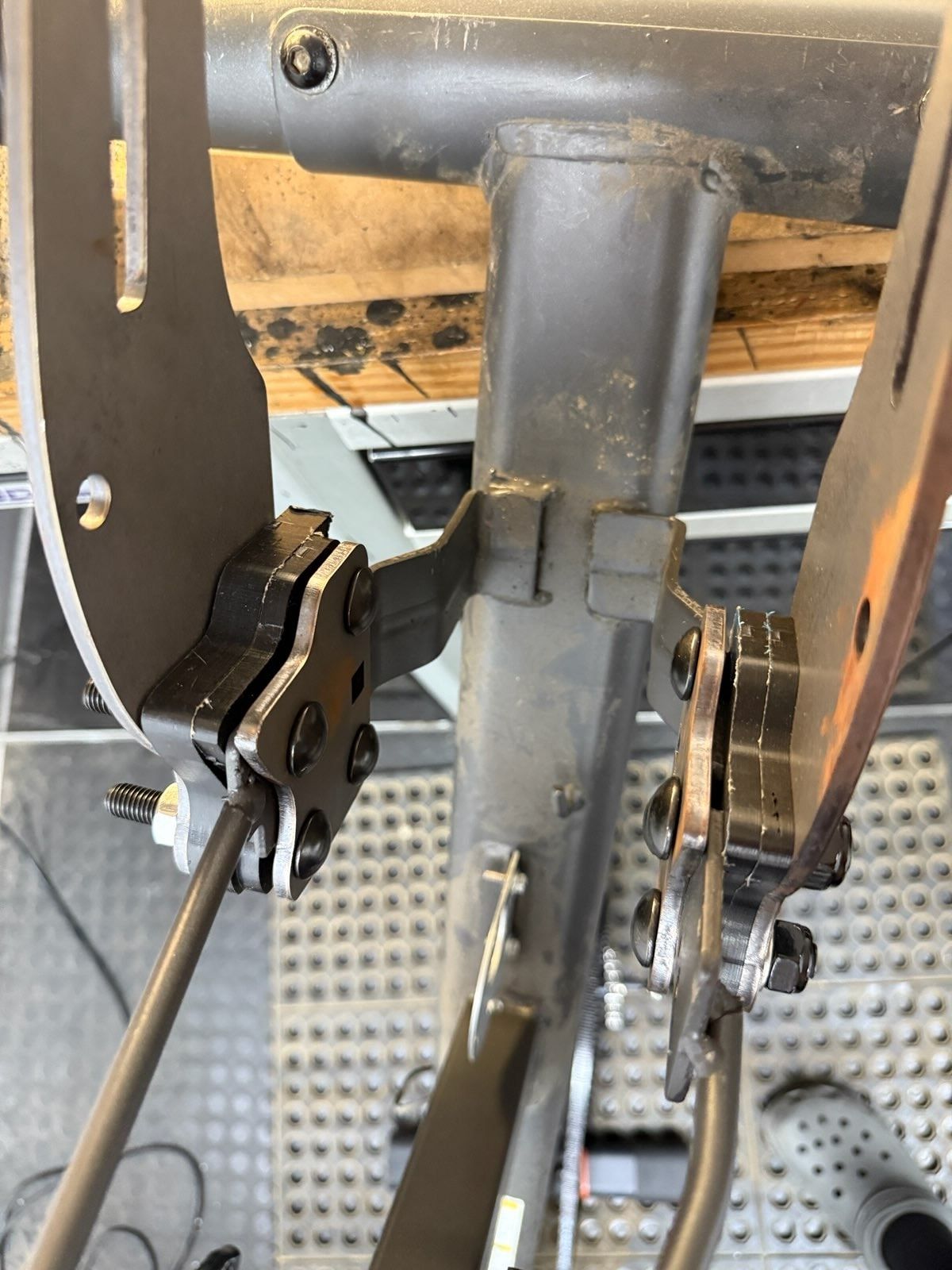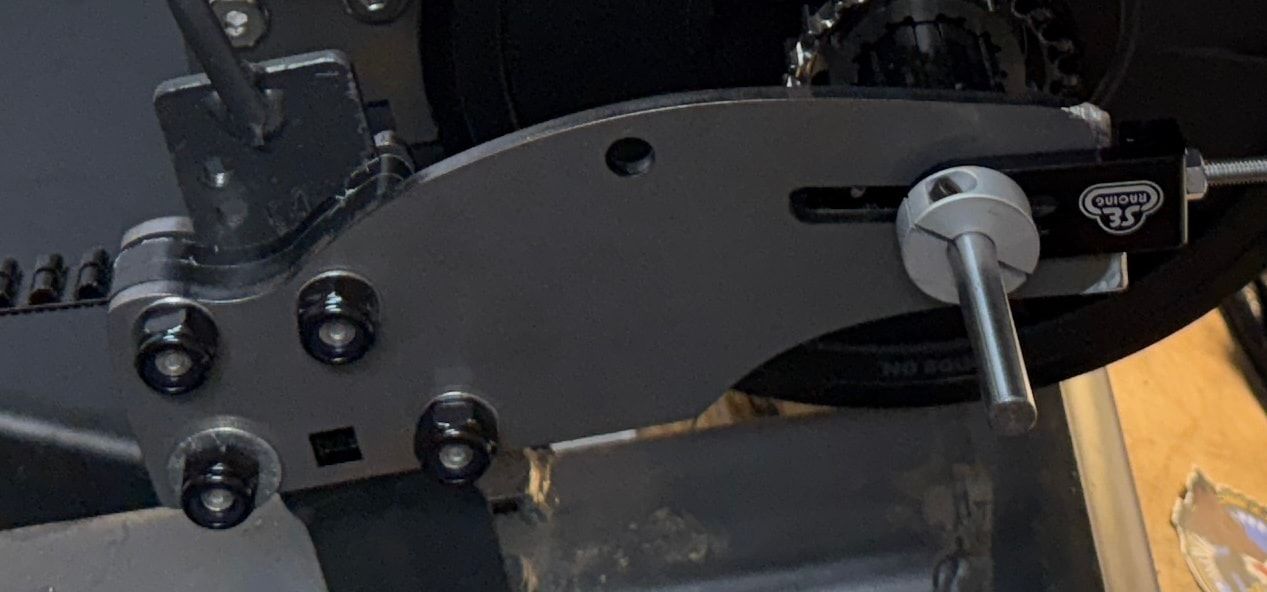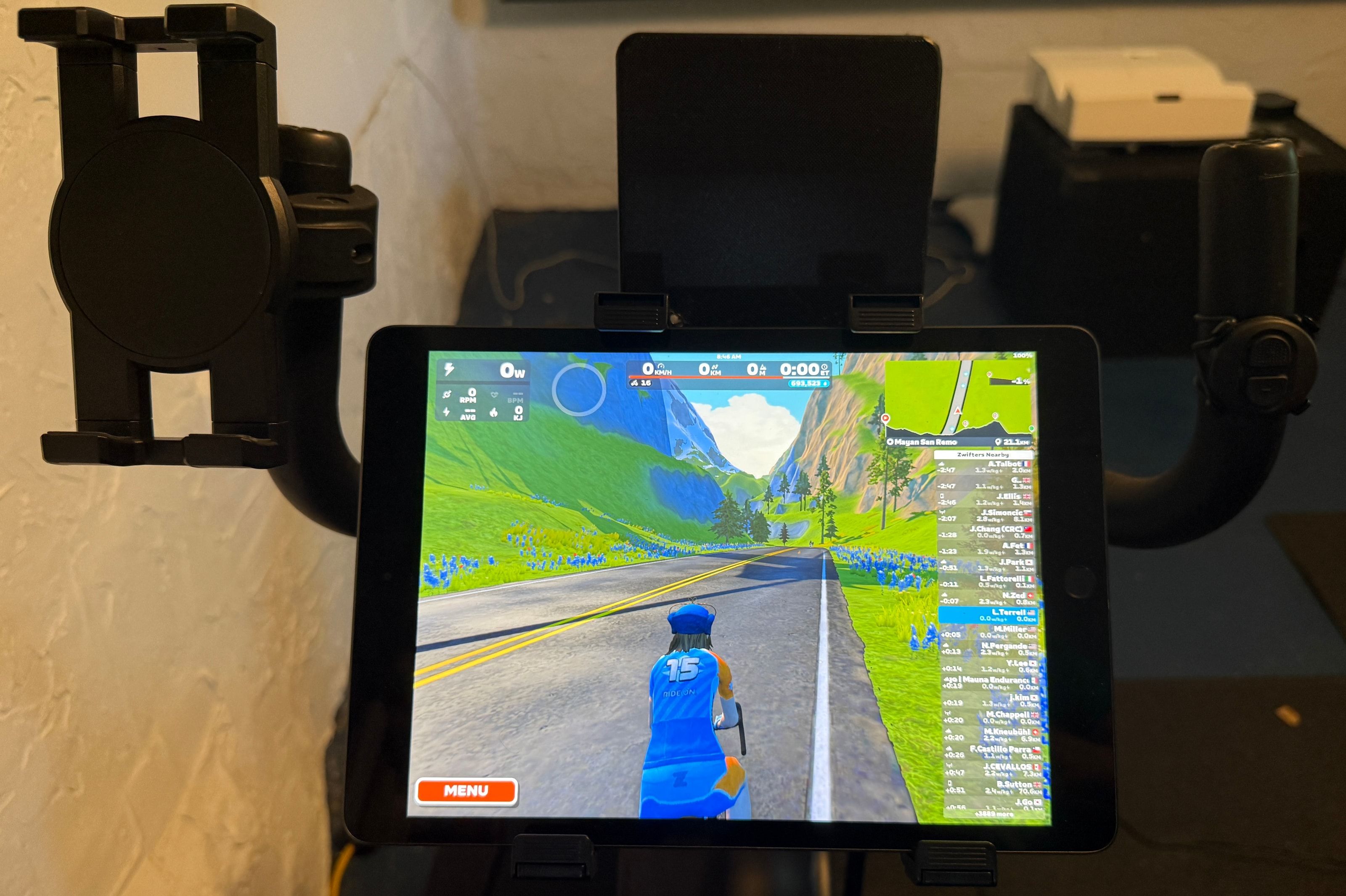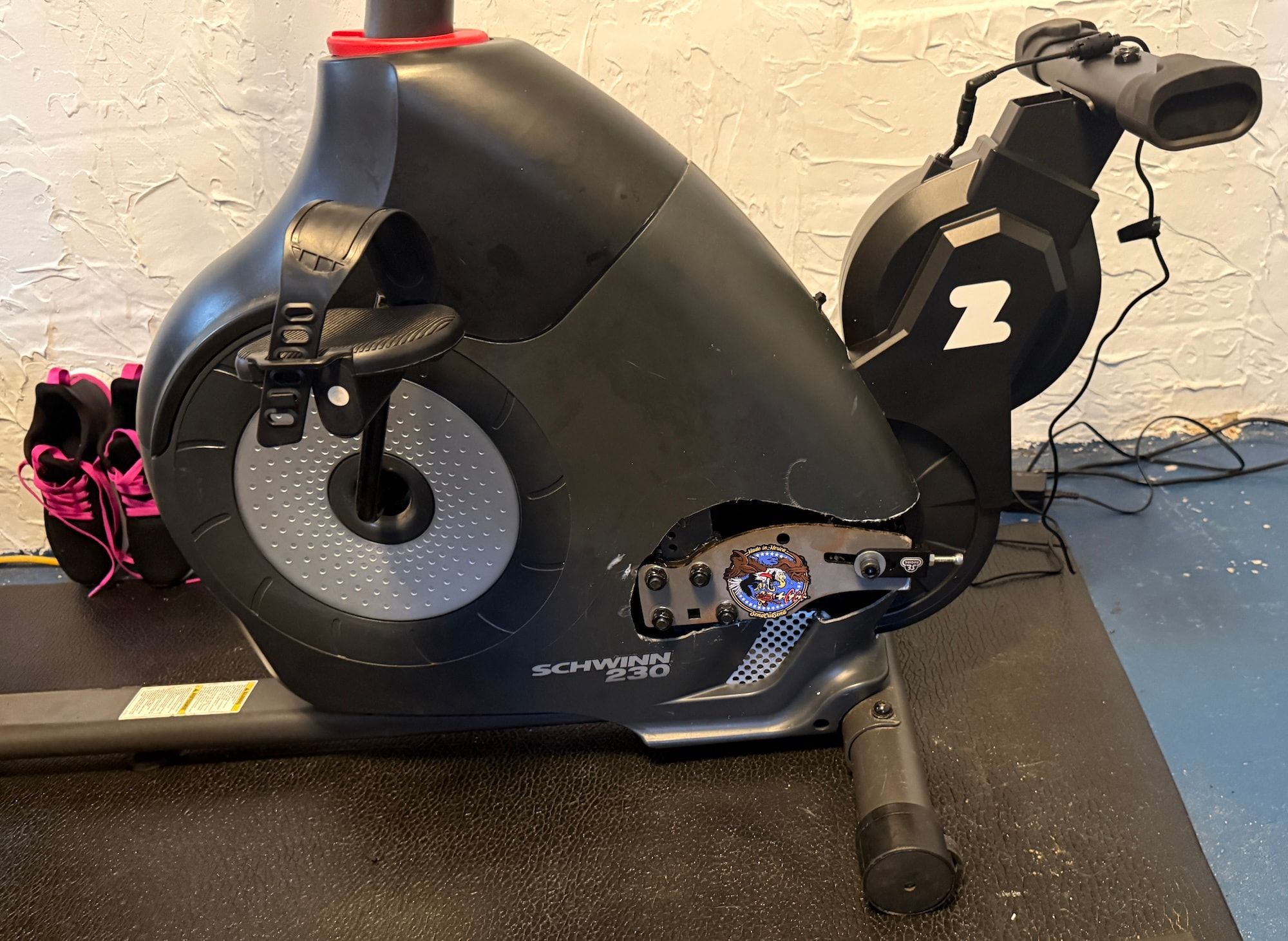
The first Schwinn conversions proved that the idea worked with turnbuckles, brackets, and whatever else was useful on the bench. This project was about taking the next step: replacing the temporary structure with mounts designed for this frame and this trainer.
I built this machine for my mother and reused a Zwift Hub I already had. A collaborator produced the mount CAD and helped turn my physical experiments into a more deliberate part. I am keeping that credit general until I have confirmation that they want their public handle attached to the project.
Designing around a real frame
Exercise-machine frames are not neutral construction sets. Tubes meet at odd angles, clearances change through the crank rotation, and the useful attachment points were designed for an entirely different resistance mechanism.
We worked through small design changes, a test plate, mount spacing, and the relationship between the trainer and belt line. The perforated prototype plate was not elegant, but it made uncertainty visible and adjustable before committing to the cleaner mount.
Reuse is part of the design
The Zwift Hub had been sitting unused. Giving it a role here mattered as much as rescuing the Schwinn itself. FrankenTrainer is partly about used exercise machines, but it is also about smart hardware that can outlive the product configuration it was originally sold in.
The finished setup combines the new mounts with a Gates Carbon Drive, a tablet position, device mounts, and virtual-shifting controls. It is a working prototype rather than a released hardware design. The gain is not only appearance: purpose-built mounting makes the machine easier to inspect, understand, and keep refining.